
Easter Prep |Categorize the Tone of Voice Used | Conversations |

Today, look at your conversations and decide what kind of voice you used.

Tone CategoryCommon ContextTypical Impact
WarmFamily, FriendsStrengthens bonds
CandidFeedback, Deep talkEstablishes trust
ClinicalMedical, ScientificEnsures precision
FacetiousSocial, ComedyLightens the mood
ResoluteCrisis, LeadershipProvides stability

When arguing focus on de escalation of tone to avoid turning the argument into a fight. are you using these tones?

Key Tones for De-escalation

  • Soft & Lowered: Reduce the volume used to encourage the other person to lower their voice. It signals that you are not a threat and are not looking for a shouting match.
  • Steady & Measured: Avoid sharp spikes in pitch. This demonstrates that you are in control of your emotions, which can have a positive effect on the other person’s emotional state.
  • Empathetic: This involves a warmth in the voice that conveys that the person has heard you. It validates their feelings without necessarily agreeing with their point.
  • Inquisitive (Curious): Using a rising intonation at the end of sentences to turn statements into questions.
  • Vulnerable: A softer, thinner tone that admits your own feelings without over emotion can instantly disarm an aggressive opponent.

If you notice that you use the following tones, what tone can you use to replace it to avoid escalating an argument into a fight?

  1. Sarcasm: Even if your words are polite, a sarcastic “edge” feels like a psychological jab.
  2. Condescending: The calm voice that sounds like you are talking to a child. This is often more infuriating than yelling.
  3. Apathetic: Looking or sounding like you don’t care.

Easter Prep | Argue Turning into a Fight | What is in the Toxic Sink?

Today, make a list of what is in the Toxic Sink topics turn an argument into a fight in your relationship.

1. Character Assassination

Instead of discussing a specific behavior, the topic shifts to the person’s fundamental nature. This moves the goalpost from “you did something wrong” to “there is something wrong with you.”

  • The Switch: Changing “You forgot to call” to “You are incredibly selfish and unreliable.”
  • The Effect: This triggers an immediate defensive response because the person feels they have to defend their entire character rather than solve a simple issue.

2. Historical Inventory that May Be Toxic

This involves bringing up every past mistake or unresolved grievance from the last five years. It’s called “kitchen sinking” because you throw in everything but the kitchen sink.

  • The Switch: Changing “We need to budget better” to “And while we’re at it, remember that time you overspent in 2022? And how you never listen to my mom?”
  • The Effect: The original problem gets buried under a mountain of old hurt, making it impossible to reach a resolution.

3. Absolute Generalizations

Using words like “always” or “never” expands a single incident into a permanent pattern.

  • The Switch: Changing “I’m frustrated you’re late” to “You never show up for me when it matters.”
  • The Effect: It feels like a trap. Since it’s almost never true that someone never does something, the argument becomes a technical debate about history rather than an emotional connection.

4. Comparison to Others

Invoking a third party—usually a parent, an ex-partner, or a “perfect” friend—is one of the fastest ways to trigger volatility.

  • The Switch: “You’re acting just like your father.”
  • The Effect: This introduces a “phantom” participant into the fight, making the person feel judged against a standard they didn’t agree to.

5. Weaponizing Vulnerabilities

Bringing up things the other person shared in confidence during a moment of closeness is a massive breach of trust.

  • The Switch: Using a partner’s fear of failure or a past trauma as a way to “win” the current point.
  • The Effect: This creates a deep sense of betrayal that often outlasts the actual argument.

Know When You Are Angry | Daily Storey | Easter Prep

Today, Recognize the physical signs that can help you manage your emotion before they take the driver’s seat and overtake your day.


Physical Red Flags

Your body provides the most immediate emotion tell. Look for these reactions:

  • The Heat: A literal “flush” or rising temperature in your face, neck, or ears.
  • Muscle Tension: Clenching your jaw, grinding your teeth, or squeezing your fists until your knuckles turn white.
  • Chest & Breath: Your heart rate increases, and your breathing becomes shallow and rapid.
  • A knotted feeling in your stomach or a sudden surge of jittery energy in your limbs.

  • Tunnel Vision: You become hyper-focused on the perceived “wrong” or the person who upset you, losing sight of the bigger picture.
  • The “Volume” Jump: You notice your voice getting louder, or conversely, you become stone-cold silent (the “shut down”).
  • Sarcasm & Sharpness: Your responses become snappy, cynical, or unusually blunt.
  • Pacing: An inability to sit still; a physical need to move or “do something” about the feeling.

The “Iceberg” Check

Anger is often called a secondary emotion. It frequently acts as a protective shield for more vulnerable feelings underneath, such as:

  1. Hurt or Betrayal
  2. Embarrassment
  3. Fear or Insecurity
  4. Exhaustion

Conflicts and Arguments | Relationship Audit | List Three

For Day Two of Easter Prep, create a list of three arguments that are common in your relationship with your friends, spouse and family. Whether you’re arguing over a bar tab or a curfew, most conflicts boil down to a few core tensions. Here are three recurring arguments across those three relationship categories:


1. Friends

Friend argue when unwritten rules in their relationship are broken.

  • The Flakiness Factor: You always cancel last minute. I’m the only one who ever reaches out. It’s less about the event and more about an imbalance of effort in the relationship.
  • A Relationship Shift: Arguments often erupt when one friend gets into a serious relationship or joins a new social circle, leaving the other feeling deprioritized or replaced or ignored.
  • Money and Social Stakes: When planning events, the cost or the subject of the social interaction may be causing conflicts.

2. Dating Partners: The “Integration” Issues

In romantic relationships, arguments usually stem from trying to merge two separate lives into one cohesive unit.

  • The Labor Load: This covers everything from who does the dishes to who remembers the birthdays. It’s a recurring fight about perceived fairness and mental energy.
  • Communication Styles: One person wants to talk it out immediately, while the other needs space to process. This creates a cycle where one feels ignored and the other feels smothered.
  • The Friendship Spectrum: Even in established couples, this manifests as disagreements over the pace of the relationship—when to move in, how much time to spend with in-laws, or future life goals.

Most of these arguments aren’t actually about the dishes, the text messages or a curfew. They are usually about a deeper need for respect, appreciation, or security.

Cleaning Your Relationship | Daily Goal | Audit Your Arguing Style

For the next ten days, focus on observing your current fighting style without trying to fix it.

  1. Day 1: Identify your “Conflict Style” (e.g., The Pursuer vs. The Withdrawer).
  2. Day 2: List your top three “Recurring Arguments” (the ones that never get solved).
  3. Day 3: Identify your physical “Tell” for anger (clenched jaw, heat in chest).
  4. Day 4: Log “Kitchen Sinking”—note every time a past issue is brought into a current one.
  5. Day 5: Track “Tone of Voice”—notice when sarcasm replaces directness.
  6. Day 6: Identify your “Early Warning System” (the moment you know a fight is coming).
  7. Day 7: Discuss “The Hangry Factor”—how hunger or fatigue affects your patience.
  8. Day 8: Audit your “Digital Habits”—do you argue over text? (Agree to stop this).
  9. Day 9: Identify “Interruption Patterns”—who talks over whom?
  10. Day 10: Share one thing your partner does well during a disagreement.

Today, review and define your arguing style in your relationship using the following styles as the basis to describe your arguing style for different situations in your relationship.

Competing

This is the “I win, you lose” approach. It is high on assertiveness and low on cooperativeness.

  • When to use it: In emergencies where quick, decisive action is vital, or when an unpopular decision must be implemented.
  • The Risk: It can breed resentment and damage long-term relationships if used as a primary tool.

Accommodating

The polar opposite of competing, this is “I lose, you win.” You prioritize the other person’s concerns over your own to maintain harmony.

  • When to use it: When you realize you are wrong, when the issue matters much more to the other person, or when “keeping the peace” is more valuable than the specific outcome.
  • The Risk: Your own needs may be consistently ignored, leading to burnout or “martyr” feelings.

Avoiding

This is the “No winner, no loser” style. You sidestep the conflict entirely, neither pursuing your own goals nor helping the other person with theirs.

  • When to use it: When the issue is trivial, when tensions are too high and people need to cool down, or when you have no chance of winning.
  • The Risk: Problems often fester and grow larger when they aren’t addressed.

Collaborating

This is the “I win, you win” style. It requires high assertiveness and high cooperation. Both parties work together to find a creative solution that fully satisfies everyone’s concerns.

  • When to use it: When the concerns of both parties are too important to be compromised, or when you want to merge different perspectives.
  • The Risk: It requires a lot of time, energy, and trust from both sides.

Compromising

This is the “We both win a little, we both lose a little” middle ground. It’s the “split the difference” approach where both sides give up something to reach a quick agreement.

  • When to use it: When you need a temporary fix for a complex issue or when you’re at a standstill with a peer of equal power.
  • The Risk: It can result in a “sub-optimal” solution where neither party is actually happy, just equally dissatisfied.

40 Day Lent Starts on Wednesday February 18, 2026

Today, Clean out your washer and dryer. Below are some tips on cleaning out both machines and some maintenance suggestions:

Clean the Washer

  • The Tub Clean: Most modern washers have a “Tub Clean” cycle. If yours doesn’t, use the Heavy Duty or Whites setting with the hottest water available.
  • The Cleaning Agent: Use a specialized washing machine cleaner tablet, or substitute with 2 cups of white vinegar poured directly into the drum.
  • The Gasket (Front-Loaders Only): This is the rubber ring around the door. Wipe it down with a 1:1 solution of vinegar and water. Be sure to peel back the folds to find trapped hair, coins, or slime.
  • The Filter: Locate the small hatch at the bottom front of the machine. Place a towel down, unscrew the filter, and rinse out the debris.

Clean the Dryer

  • The Lint Screen: Beyond emptying it after every load, wash the screen with warm soapy water once a month. Dryer sheets can leave a waxy film that restricts airflow even if the screen looks “clean.”
  • The Housing: Use a vacuum hose attachment to reach into the slot where the lint screen sits. You’d be surprised how much lint bypasses the trap.
  • The Drum: Wipe the interior drum with a microfiber cloth and a bit of rubbing alcohol or stainless steel cleaner to remove any transferred dyes or wax from dryer sheets.
  • The Exhaust Vent: At least once a year, disconnect the large silver hose from the back of the dryer and vacuum it out, or use a vent cleaning brush kit to clear the path to the outside wall.

Maintenance Tips

ComponentActionFrequency
Washer DoorLeave it propped open after use to prevent mold.Every load
Detergent DrawerPull it out and rinse away “goop.”Monthly
Dryer VentInspect the exterior flap for airflow.Seasonally

An Outdoor Date | February Goals | Valentine’s Day

What to do when your significant other is not an outdoor kind of person:

– Create a low-pressure, shelter-forward outdoor experience: think comfort – warmth, shade, shelter, good vibes, and easy transitions back indoors.

– Start with something indoors and adjacent to nature.  A warm café, greenhouse, or museum café where you can then move to a short outdoor activity, and can return to an indoor environment for a light meal or a coffee.

Plan with these three simple date Segments

– Beginning of the date is an indoor-friendly start: A comfortable place to meet and chat such as in a coffee shop with seating, a greenhouse café, or a museum café.

– The main part of the date is a sheltered outdoor activity: Choose something outdoors or outdoor like with built-in shelter and options for pausing such as benches  or a covered patio.  

– The end of the date goes back indoors: Go back to the original cafe or go to a dessert shop, a bookstore cafe, a lounge with heaters.

Hybrid date ideas 

Garden + cafe: Visit a botanical garden or conservatory then wander to the on-site cafe for cocoa or coffee.

Park stroll with shelter breaks: Pick a scenic park, plan 20 minutes of strolling, then pause under a pavilion or in a landscaped garden, with hot drinks in a thermos.

Greenhouse + snack hop: Explore a large greenhouse or plant conservatory, then head to a nearby bakery or cafe patio.

Museum or gallery + outdoor sculpture loop: Do a short indoor exhibit, then place time for a stroll through an outdoor sculpture garden or courtyard.

Farmers market stroll + indoor tasting: Walk the outdoor stalls, then duck into the market’s indoor food hall or a nearby cafe to regroup.

Waterfront boardwalk with shelter: A light stroll along the water, stopping at a sheltered pier or covered seating with a warm drink.

Build in one natural transition back indoors for comfort. Don’t force the entire date to stay outside.

Have a plan B for weather: a nearby indoor option within 5–10 minutes of the outdoor activity.

Conversation and connection

– Start with low-pressure topics: favorites about indoors vs outdoors, your ideal “cozy day,” or recent small joys.

– Balance the flow: mix light, playful questions with a few meaningful prompts to gauge compatibility.

– Plan a non-awkward close: finish with a warm drink or dessert and a simple “Would you be up for a similar plan next time or maybe try X next time?”

Quick invitation wording

– Casual: “Hey, want to do a short, cozy outdoor/date-adjacent plan this Saturday? We’ll start with coffee, stroll through a sheltered garden area, and finish with a warm treat indoors if it’s chilly. What do you think?”

Specific + respectful: “If the weather’s nice, I thought we could meet for coffee, walk through the botanical conservatory, and end with hot chocolate at a café.

If weather or plans go off-script

– Rain plan: move indoors to a cafe or bookstore with a light outdoor stroll in covered areas; or swap to an indoor museum date.

– Cold or wind: shorten the outdoor segment, focus on sheltered spots, and linger at a warm cafe or greenhouse.

– If interest wanes, gracefully switch to a more indoors-friendly activity in the same venue.

Daily Goal | Valentine Prep | Cook a Meal Together

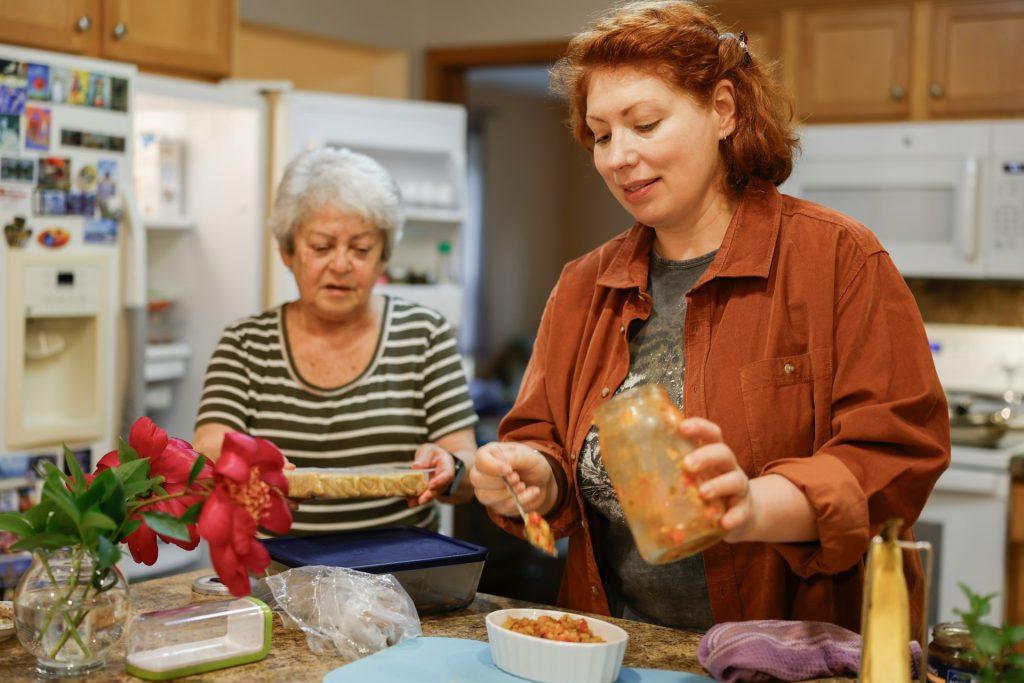
Cook a meal together. Make it less stressful by prepping the meal in advance

Cooking a meal together creates memories and traditions: Cooking a meal together as a couple on Valentine’s day is an option but planning a weekly cooking night can become a romantic gesture strengthening your relationship. Cooking memories such as the day you grilled garlic or tasted a new sauce are great ways to build up joint memories.

By cooking together, you improve your cooking skills and maybe become gourmets. As a couple, you can learn new cooking skills or research new cooking equipment. Even a simple dish can become a way to explore new cultures, family histories and personal taste.

Don’t Make Excuses

– “We’re too busy.” Start small: a 20–30 minute meal window once a week can become a reliable routine. Plan ahead with a simple, one-pot or sheet-pan recipe, or pre-measure ingredients the night before.

“Some of us don’t want to cook.” Make it a life experience. You are a team cooking to reduce your food budget or save to go out and eat. Helping to cook meals or prep the kitchen for cooking helps strengthen your family relationship and family bonds.

“We argue over taste.” Pick a flexible recipe that can be spiced up with sauces. Build a base meal and offer optional add-ins so people can customize without conflict.

Practical tips for Cooking Together

Rotating roles keeps everyone engaged and prevents one person from always doing the boring tasks.

Make cleanup part of the plan and clean as you are cooking. Don’t wait until the end of the prep to wash, wipe, and put away. A quick cleanup will keep everyone happy and prevent leftovers from piling up.

Create a playlist for cooking or look for one on Youtube.

Valentine Cooking Date | Date Night ideas to try

Build-your-own pizza night: Prepare dough (or use store-bought), set out toppings, and let everyone craft their own mini pizza. It’s fast, fun, and allows for plenty of customization.

A Taco or Nacho bar: Soft tortillas, seasoned meat or beans, and a colorful array of toppings. Great for a quick, social cooking experience.

Pasta party: Create Fresh Pasta, Boil, toss with a simple sauce, and finish with cheese, herbs. Make a garlic bread on the side.

Cooking a meal together is a repeatable act of teamwork that can strengthen communication and offer opportunities for more communication.

Today, Give Five Compliments – Written or Verbal

How to deliver a great compliment

First, be specific: Tie your compliment to a concrete example or behavior.

Second, focus on work ethic, empathy, problem-solving, or creativity.

Third, keep it brief using one or two sentences.

Fourth, center on actions, skills, or personality not looks.

Lastly, deliver in a personal way, through text or note or face to face, and in the correct context.

Here is a thoughtful compliment that doesn’t add flirting to the conversation to use as a template:

“I really appreciate your follow through on this commitment. It makes us feel more confident and able to keep moving forward.”

Customization ideas

Keep your compliments friendly and specific to your everyday.

If you’re uncertain about the tone: choose one compliment and deliver it in a straightforward, plain-spoken way without extra flourish. Do not use words that are not in your everyday vocabulary.

Genuine compliments focus on effort, character, and contribution can strengthen rapport and respect across genders.  Keep your comments specific, sincere, and non-romantic, you’ll make someone feel valued for who they are and what they do—no flirting required today.