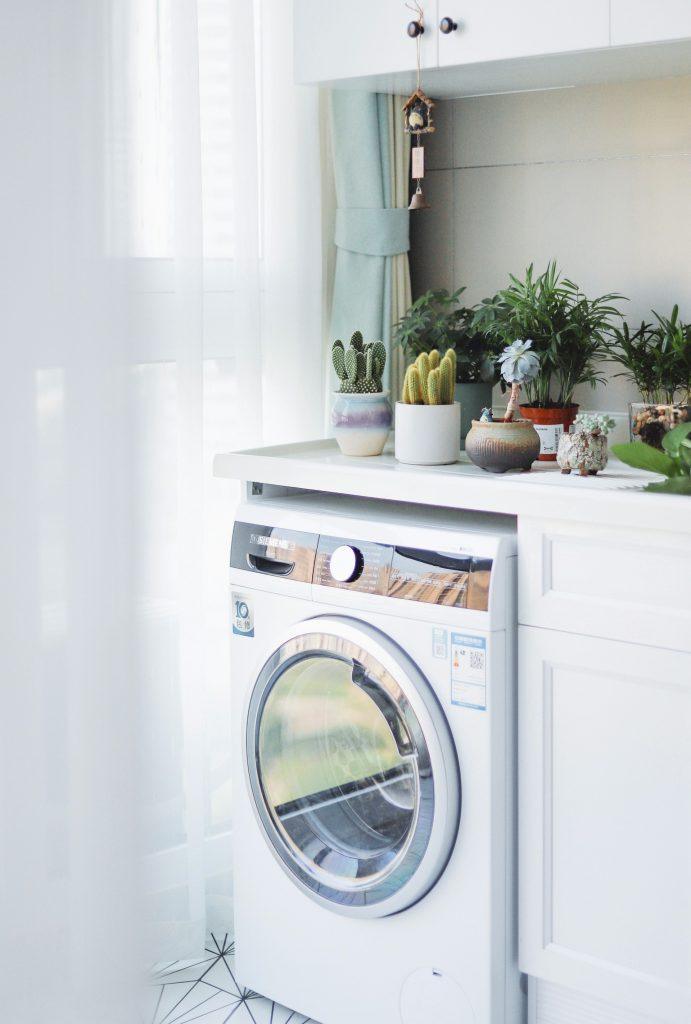
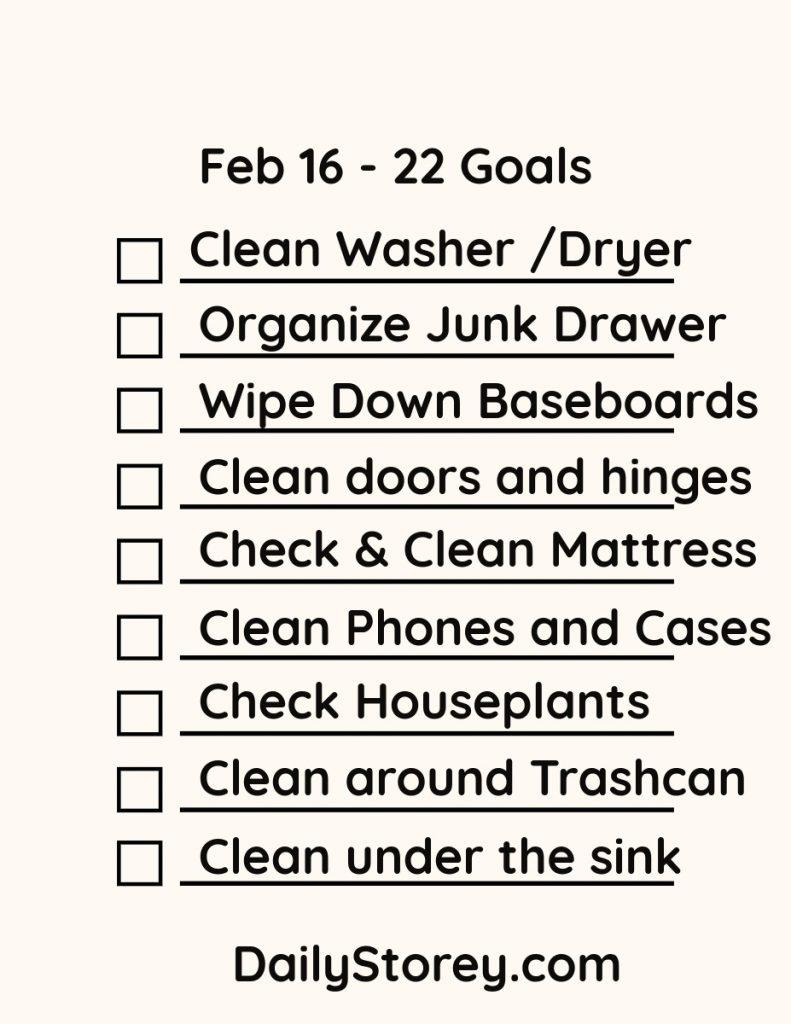
Today, Clean out your washer and dryer. Below are some tips on cleaning out both machines and some maintenance suggestions:
Clean the Washer
The Tub Clean: Most modern washers have a “Tub Clean” cycle. If yours doesn’t, use the Heavy Duty or Whites setting with the hottest water available.
The Cleaning Agent: Use a specialized washing machine cleaner tablet, or substitute with 2 cups of white vinegar poured directly into the drum.
The Gasket (Front-Loaders Only): This is the rubber ring around the door. Wipe it down with a 1:1 solution of vinegar and water. Be sure to peel back the folds to find trapped hair, coins, or slime.
The Filter: Locate the small hatch at the bottom front of the machine. Place a towel down, unscrew the filter, and rinse out the debris.
Clean the Dryer
The Lint Screen: Beyond emptying it after every load, wash the screen with warm soapy water once a month. Dryer sheets can leave a waxy film that restricts airflow even if the screen looks “clean.”
The Housing: Use a vacuum hose attachment to reach into the slot where the lint screen sits. You’d be surprised how much lint bypasses the trap.
The Drum: Wipe the interior drum with a microfiber cloth and a bit of rubbing alcohol or stainless steel cleaner to remove any transferred dyes or wax from dryer sheets.
The Exhaust Vent: At least once a year, disconnect the large silver hose from the back of the dryer and vacuum it out, or use a vent cleaning brush kit to clear the path to the outside wall.
Here are five distinct energy bar recipes you can make at home. All are no-bake, fairly quick, and yield about 12 bars each (cut to about 2×3 inches). They’re adaptable for allergies and preferences.
Almond Coconut Date Energy Bites / Bars
Yield: Depends
Total time: 60 minutes with overnight resting time not included
Ingredients:
1 1/2 cups dates, pitted
1 cup almonds
1/2 cup shredded unsweetened coconut
1–2 tablespoons coconut oil
Pinch salt
1 teaspoon vanilla extract
Instructions:
In a food processor or hand blender, blend dates until a sticky paste forms.
Add almonds, coconut, salt, vanilla, and coconut oil to the dates and pulse until finely chopped and well combined.
Scoop onto parchment and let chill for energy bites. Press into rectangles for energy bars.
Chill overnight then package to eat for breakfast or light lunch.
Tips:
Add dried fruit or honey for sweetness.
Add nut butter for more protein.
Cranberry Orange Pistachio Bars
Yield: Depends
Total time: 60 minutes
Ingredients:
1 1/2 cups rolled oats (135 g)
1 cup dried cranberries (125 g)
1 cup pistachio kernels roughly chopped
Zest of 1 orange
1/3 cup orange juice
2 tablespoons lemon or orange zest (optional)
2 tablespoons coconut oil
Pinch salt
Instructions:
In a large bowl, combine oats, cranberries, pistachios, orange zest, and salt.
In a small pan, warm orange juice with coconut oil until smooth; pour over dry mix and stir to combine.
Press firmly into a lined pan to create bars and chill overnight.
Storage and variations
Storage: Keep bars in an airtight container in the refrigerator for up to 1 week; they’ll freeze well for up to 1 month.
Substitutions:
Use gluten-free oats if needed to make them GF.
For vegan options, swap honey for maple syrup and choose plant-based butters.
Swap nuts/seed types as desired to suit allergies or taste.
Create a Photo Collage | Digital or using prints | Valentine Day |
For Today’s Valentine’s prep create a digital photo collage that tells a story, captures a vibe, or highlights a theme. Here’s a practical guide you can use right away, plus ready-to-use ideas.
The Basics:
Have a Purpose: Decide what the collage should convey. A memory? A mood? Pick what idea you want to share with the collage.
Choose a Format: Pick the size for the collage. A size that your printer can print makes collaging and framing easiest.
Mix photos to have a variety: Mix the types of photos you are using -wide, medium, close-up. Include both people and context to balance the collage.
Be Cohesive: Use a limited color palette or a single filter, if you are making a digital collage, to make images feel connected.
Text placement: Add a short caption or date if it helps tell the story, but don’t overdo it unless text is part of the collage.
Photo selection tips
8–15 photos is a good starting range for many templates; fewer for a bold, simple look, more for a full narrative. Include:
1 main image
3–5 supporting images that add context or contrast
2–6 detail shots (textures, objects, places)
Make sure to have a Balanced number of people, places, and things in the photographs to avoid a photo‑heavy collage that feels lopsided.
Choose at least one wide establishing shot and one close‑up or candid moment for the collage.
Check variety in lighting and color to avoid a jarring collage. For examples look at Pintrest or Adobe Express.
Layout ideas
Grids: Equal-sized images in a clean grid; good for social posts.
Main photo and a grid: One large center photo with smaller images radiating around it.
Timeline strip: A horizontal or vertical line of images that tells a chronological story.
Overlay and caption: One image with a semi-transparent color wash and a short caption/date. Easy to create with a digital file.
Design and editing tips
Aspect ratio: Decide early (square for IG posts, 4:3 or 16:9 for prints/wallpaper).
Color: Apply a unifying filter or adjust white balance so skin tones look natural and colors don’t clash.
Borders and shadows: Soft white/gray borders or subtle drop shadows help images separate without feeling busy.
Text: Use 1–2 fonts total; keep captions short (dates, locations, a few words). Ensure readability against any image.
Spacing: Leave consistent margins around images; avoid crowding—negative space helps the collage breathe.
Resolution: Export at least 300 PPI for prints; 1080×1080 or 1920×1080 for social, depending on platform.
Tools and templates to try
– Canva: Large library of collage templates; great for quick, polished results.
– Adobe Creative Cloud Express (formerly Spark): Easy templates and text options.
– Google Photos: Simple collage maker built into Photos app; fast for quick sharing.
Step-by-step easy workflow for a digital Collage
1) Define purpose and size: choose your final format (e.g., square 1080×1080).
2) Gather photos: pick 8–15 images that tell the story; grab a main photograph.
3) Pre-edit: lightly crop to the target aspect ratio; adjust exposure/white balance if needed.
4) Choose layout: pick a template or sketch a simple plan (hero center, others around).
5) Arrange and tune: place images, adjust sizes, add a subtle color wash if desired.
6) Add text only if it adds meaning: date, location, short caption.
7) Export: save high-resolution for prints; export optimized size for web.
8) Quick check: view on a phone and on a computer screen to ensure readability and balance.
Simple origami note style you can create for Valentine’s day
Origami-inspired note formats are an interesting way to make the act of keeping a note feel special and decorative. Here are two simple ideas you can try today while writing a love note for Valentine’s day.
The pocket origami note
– What you need: a square sheet of paper (4 x 4 inches works well).
Instructions: Folding the Note.
1) Write your note on one side of the square.
2) Fold the paper in half horizontally to make a rectangle; crease well.
3) Fold the top edge down to meet the bottom edge, forming a smaller square; crease.
4) Fold the left and right edges toward the center to create a little pocket at the bottom.
5) Tuck the folded note into the pocket so you can pull it out when you’re ready to read it.
Why it’s worth creating an origami note: you get a tactile note you can carry in a binder or planner that invites you to keep it.
Idea 2: The origami bookmark-note
– What you need: a rectangle sheet of paper.
– How to fold:
1) Write your note on one side.
2) Fold the sheet in half lengthwise to create a long card.
3) Fold the top and bottom edges toward the center to form a slim, flat bookmark with a pocket in the middle for a small slip of paper containing your note.
This note doubles as a bookmark and a note carrier, so you can make the card again for different books or as your loved one finishes a chapter. The card is special but is still simple to make.