
Create an Origami Note for your Loved One

Here is the link to the full article about Creating a Note for Valentines Day. Share the note today, February 3.

The full list of Valentine Countdown Activities | Today’s Article about Writing Notes

Simple origami note style you can create for Valentine’s day

Origami-inspired note formats are an interesting way to make the act of keeping a note feel special and decorative. Here are two simple ideas you can try today while writing a love note for Valentine’s day.

The pocket origami note 

– What you need: a square sheet of paper (4 x 4 inches works well).

Instructions: Folding the Note.

  1) Write your note on one side of the square.

  2) Fold the paper in half horizontally to make a rectangle; crease well.

  3) Fold the top edge down to meet the bottom edge, forming a smaller square; crease.

  4) Fold the left and right edges toward the center to create a little pocket at the bottom.

  5) Tuck the folded note into the pocket so you can pull it out when you’re ready to read it.

Why it’s worth creating an origami note: you get a tactile note you can carry in a binder or planner that invites you to keep it.

Idea 2: The origami bookmark-note  

– What you need: a rectangle sheet of paper.

– How to fold:

  1) Write your note on one side.

  2) Fold the sheet in half lengthwise to create a long card.

  3) Fold the top and bottom edges toward the center to form a slim, flat bookmark with a pocket in the middle for a small slip of paper containing your note.

This note doubles as a bookmark and a note carrier, so you can make the card again for different books or as your loved one finishes a chapter. The card is special but is still simple to make.


12 Days to Valentine’s Day | Countdown

All my paperwork has been submitted for Trefuly. To celebrate, here is a countdown for Valentine’s Day on our sister blog:

I usually am not talking about my personal life but I am putting a little note in today, I have been appointed as Senator of Georgia, USA which is an inherited seat. I will be working in DC and Atlanta starting this month. Because of this unexpected change in my career path caused by inheritance, HealthStoreyUSA’s launch is delayed until I hire staff to work in my place.

Sincerely, Dr. Emmy Ann Horstkamp, JD, Senator from Georgia, Chief of Tribe America.

| Packing for a Trip | Health Storey Newsletter 4 |

Daily goals to get you travel-ready and eating more vegetables this February.

As you plan trips and look toward a healthier routine, this week’s newsletter brings you a practical, easy-to-follow prep plan. We’ve lined up daily goals to get your space, your packing, and your meals on track—plus a February veggies spotlight to keep your plate vibrant even while you’re on the go.

This Week’s Daily Goals

– Monday, January 26: Empty Trash from House

– Tuesday, January 27: Organize a Drawer

– Wednesday, January 28: Vacuum the House

– Thursday, January 29: Prepare to Leave on a Trip

– Friday, January 30: Organize Travel Bags, Clean Them

– Saturday, January 31: Travel Luggage for a Weekend

– Sunday, February 1: February is About Eating More Vegetables

Healthy Travel Prep: Quick Tips

– Hydration on the go: Carry flavour packets. My favourite drink mix contains 3 grams of electrolytes that hydrate and add flavour to city tap water or bottle of water you purchase at the store. If you are packing light, you do not need to bring your own drink containers on your trip.

– Smart Lunch options: Before lunch or dinner, eat a handful of nuts to add protein to your meal. While traveling, your meals may not be as balanced or may contain less protein than at home.

-Focus on Neat Movement: You will be on a flight, spend the time at the airport standing or walking around. Track your mileage on your phone. Make sure to use the bathroom before getting on the plane and limit what you eat while flying. Grab a beverage when you land to drink while going through customs and picking up your luggage.

Sleep: Take ear buds and a travel pillow. You can buy a travel pillow at the airport for around ten dollars and give it to someone as a gift. Once you are at your destination, stay awake as long as you can to avoid jet lag. Carry a compact eye mask, earplugs, a small pillow, and a reusable tote for day trips.

Travel health kit: Grab the first aid kit you created for traveling and make sure it includes: basic bandages, antiseptic wipes, pain relievers, any personal meds, homemade ginger candy.

Focus of February 2026 Daily Goals

Vegetables

– Veggies of the Month: Bok choy Mushrooms, Peppers and Lettuce. Each week the focus will be on adding vegetables to our rice for breakfast and lunch.

Topics for Feb: Quick Prep for Veggies, Storage ideas and nutritional information and research on different vegetables being added into the Daily Story month.

Weekend | Work On Home Office Layout | Hours

Best Office Layouts for a Productive, Adaptable Workplace


The layout of an office does more than just hold desks and chairs. It shapes how people collaborate, where deep work gets done, and how a company adapts to change. A great office layout supports your culture, keeps people engaged, and scales with growth. The challenge is balancing openness with privacy, collaboration with focus, and cost with comfort. Below are the most effective layouts you’ll see in modern offices, along with when they shine, common pitfalls, and practical tips to make them work for your team.

Open-Plan / Collaborative Layout
What it is: Long rows or clusters of desks with minimal walls, designed to enable quick conversations and spontaneous collaboration.

Pros

  • Fosters quick communication and teamwork.
  • Maximizes floor space and can feel more energetic and inclusive.
  • Easier to reconfigure as teams shift.

Cons

  • Noise and visual distractions can hurt focus.
  • Some employees may feel exposed or exposed to interruptions.

When it shines

  • Creative, design, and sales teams that rely on rapid feedback.
  • Startups or fast-growing teams that prioritize collaboration over privacy.
  • Use zones: dedicate specific areas for heads-down work and others for collaboration.
  • Add sound-absorbing materials: carpets, ceiling tiles, acoustic panels, and upholstered furniture.
  • Create “quiet corners” with taller furniture or screens for focused work.
  • Introduce visual cues to signal when someone is in deep work mode (e.g., desk nameplates, signals, or status indicators).

Activity-Based Work Layout
What it is: A campus-like approach with distinct zones for different activities—focus, collaboration, socializing, and breakout work—often with a mix of furnishings and clever wayfinding.

Pros

  • Supports varied work styles within one space.
  • Encourages collaboration in the right spaces and privacy when needed.
  • Flexible by design; easy to reallocate areas without major construction.

Cons

  • Requires thoughtful planning and clear usage guidelines.
  • Can feel chaotic if zones aren’t well defined or poorly signed.

When it shines

  • Teams with a mix of roles: developers who need deep focus, marketers who need collaboration, and managers who host meetings.
  • Companies undergoing frequent project shifts or process changes.

Practical Tips

  • Map activities to spaces: designate dedicated rooms or zones for focus, meetings, quick huddles, and social areas.
  • Plan sightlines and wayfinding: clear arrows, color-coded zones, and signage help people find the right space quickly.
  • Invest in flexible furnishings: height-adjustable desks, mobile whiteboards, and movable screens to morph spaces as needs change.
  • Consider acoustics in open areas: soft furnishings, wall panels, and ceiling treatments to keep background noise manageable.

Cellular Private Offices / Mixed Privacy Layout
What it is: A mix of private offices or enclosed workstations with doors, balanced by shared spaces for meetings and collaboration.

Pros

  • Strong privacy and reduced interruptions for deep work.
  • Clear delineation between management and staff in many designs.

Cons

  • Can feel isolating and reduce spontaneous collaboration if overused.
  • Higher real estate costs per employee and potential underutilization.

When it shines

  • Roles that require confidentiality or extensive concentration (legal, finance, R&D, senior leadership).
  • Teams that need predictable meeting rooms and private spaces for sensitive conversations.
  • Blend with open, collaborative zones to avoid isolation.
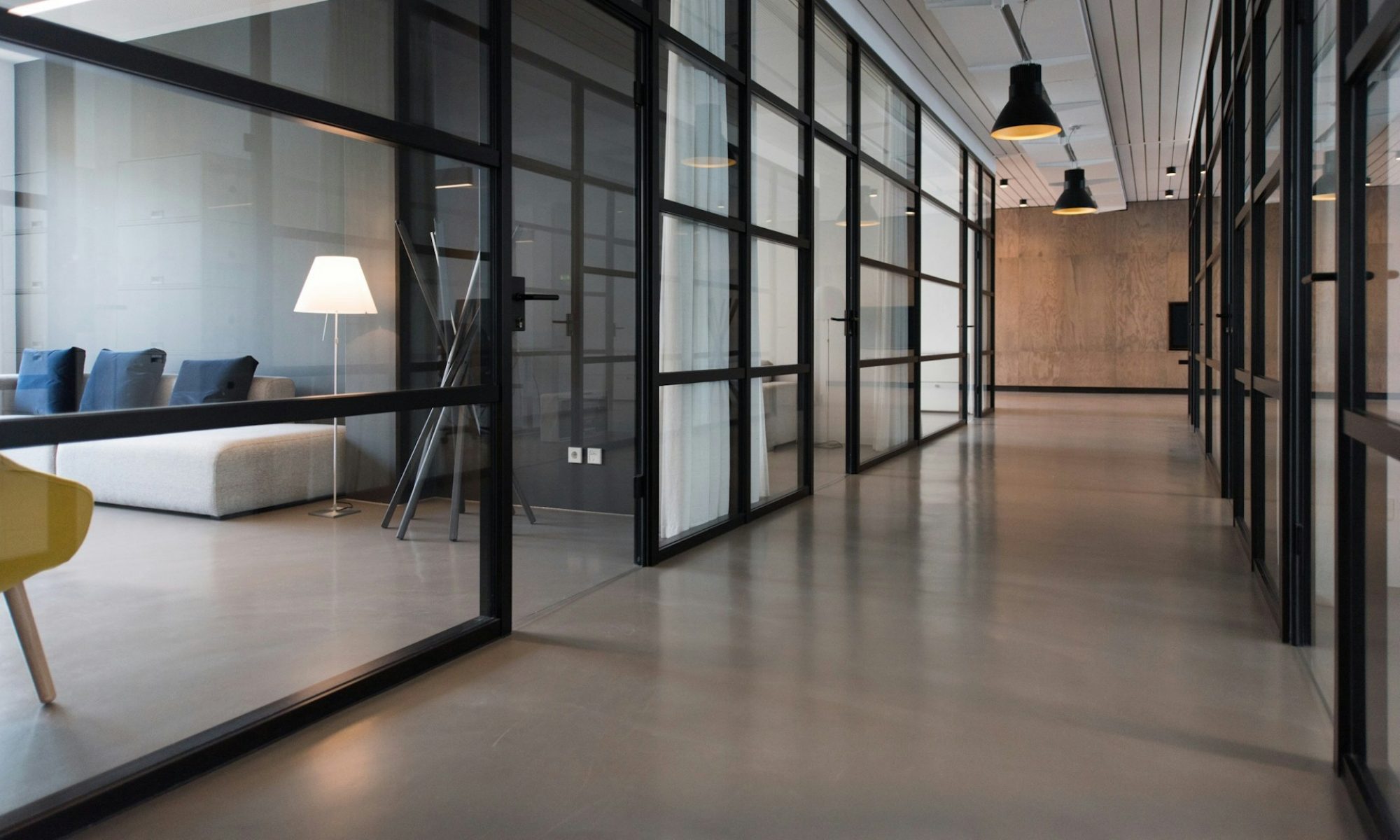
  • Use glass or transparent partitions to maintain a sense of openness while preserving privacy.
  • Create “office adjacencies” for quick interactions: place meeting rooms and quiet rooms near teams to minimize long walks.

Hybrid / Breakout-Heavy Layout
What it is: A flexible mix of small nooks, breakout lounges, informal seating, and short-task desks designed to support quick, informal work sessions and meetings.

Pros

  • Encourages informal collaboration and rapid problem-solving.
  • Feels modern and approachable, often improving employee satisfaction.

Cons

  • Can suffer from underuse if spaces aren’t inviting or properly scheduled.
  • Requires ongoing management to keep reservation systems simple and fair.

When it shines

  • Teams that brainstorm frequently, run standups, or host clients in-house.
  • Organizations embracing agile, sprint-based workflows.

Practical tips

  • Offer a spectrum of breakout formats: high-top tables for quick chats, lounge seating for relaxed discussions, and semi-enclosed nooks for privacy.
  • Implement a simple booking or “first-come, first-served” system to avoid crowding and overlap.
  • Provide writing surfaces and digital collaboration tools in breakout areas to capture ideas quickly.

Modular / Flexible Layouts with Movable Walls
What it is: Floor plans built with demountable walls, modular furniture, and easy-to-reconfigure components that evolve with your business.

Pros

  • Extremely adaptable to headcount changes or new workflows.
  • Protects long-term space value by enabling reconfiguration rather than relocation.

Cons

  • Higher initial investment and planning effort.
  • Requires ongoing management to keep the space coherent.

When it shines

  • Growing companies, firms that pivot often, or businesses planning frequent internal reorganizations.
  • Spaces that host rotating teams or cross-functional projects.

Practical tips

  • Plan for scalable zones: design core areas that can be expanded with modular inserts.
  • Choose modular furniture with multiple configurations to support different activities.
  • Keep electrical, data, and HVAC in mind; plan for future needs when you install partitions.

Deskless / Hot-Desking Layout
What it is: A system where employees don’t have assigned desks; they choose a workstation when they arrive, often guided by a booking app.

Pros

  • Maximizes real estate efficiency; good for hybrid or remote-heavy teams.
  • Encourages movement and interaction across departments.

Cons

  • Personalization can be tough; some people struggle to leave belongings behind.
  • Requires strong IT and facilities support to manage bookings, equipment, and entry access.

When it shines

  • Companies with strong hybrid work policies or limited on-site needs.
  • Teams that travel between client sites or work remotely part

Daily Storey | Sort Paperwork & Receipts|One Hour a Month|


If your desk looks like a library explosion every tax season, this post is for you. A tidy paperwork system saves time, protects your privacy, and makes audits less stressful. The goal isn’t to become a paper minimalist overnight, but to set up a straightforward rhythm: decide what to keep, securely dispose of what you don’t, and digitize receipts so nothing slides into chaos.

Title: Shred, Recycle, and Relax: A Simple Guide to Tidy Paperwork

The core idea for today’s hour: shred, recycle, and organize with a purpose

  • Shred: anything that contains sensitive personal or financial data (SSN, bank accounts, passwords, etc.).
  • Recycle: what isn’t sensitive and can’t impact your finances or legal obligations.
  • Organize: what you need to keep for audits, taxes, warranties, and compliance.
  • Digitize where possible: scan documents you need to keep and store them securely.

What to avoid

  • Don’t keep everything “just in case.” Most documents have a practical retention window. Holding on indefinitely creates clutter and risk.
  • Don’t mix sensitive papers with general recycling. A pile of unshredded papers can expose you to identity theft and data breaches.
  • Don’t staple and binder-clip everything into one giant folder. It makes shredding and scanning harder, and important items can get buried.
  • Don’t rely on memory or scattered notes for audit-related items. If it’s needed for legal or tax purposes, store it in a labeled, retrievable place.
  • Don’t ignore digital privacy bits. Even digital receipts can contain sensitive information; plan how you store and delete digital copies too.

What to keep for auditing

Audits (tax, legal, or financial) typically require documentation that proves your numbers and decisions. A practical rule of thumb is to keep supporting documents for a reasonable window and then consolidate into a retention plan. When in doubt, consult a CPA or your legal advisor.

Common categories to retain

  • Tax returns and supporting documents (receipts, invoices, mileage logs): keep at least 7 years. This aligns with many tax professionals’ guidance and can help if the IRS questions past filings.
  • Invoices and financial records (vendor invoices, receipts for business expenses): keep 7 years.
  • Bank statements and reconciliations: keep 7 years.
  • Contracts and legal documents: keep the life of the contract plus 7 years.
  • Payroll records and wage statements: keep a minimum of 7 years.
  • Insurance policies and claim records: keep through the policy period plus about 6 years.
  • Asset purchase, depreciation, and title documents: keep for as long as you own the asset, plus 7 years after disposition.
  • Warranties and product manuals related to business assets: keep for as long as you own the item or as long as the warranty lasts.

Retention needs can vary by business type, state requirements, and specific tax rules. If you’re unsure, a quick consult with a CPA can set a precise schedule tailored to you.

[pms-restrict]

WorkFlow

How to handle receipts without the mess
The easiest way to stay on top of receipts is to combine habit with a simple system. Here’s a reliable, scalable approach:

Decide what to keep and digitize

  • For every purchase, decide if the receipt is tax-deductible, a warranty item, or needed for returns. If yes, plan to keep it. If not, you can usually recycle after digitizing.
  • Use a receipt management app or scan key receipts right away.

Digitize with a consistent naming and filing system

  • Use a mobile scanning app or a dedicated scanner to create clear PDFs or images.
  • Naming convention idea: “YYYYMMDD_Vendor_Category_Amount.pdf” (e.g., 20260115_OfficeDepot_Supplies_45.20.pdf).
  • Attach metadata: category (Office/Travel/Office Supplies), purpose (tax-deductible? deductible amount), method (credit card, cash), and a brief note if needed.

Store digitally in a secure, organized place

  • Centralized cloud folder structure (for example:
  • 01 Taxes
  • 02 Banking & Billing
  • 03 Receipts by Year
    • 2025
    • 2026
  • Use OCR-enabled storage so search can find vendor names, amounts, and dates.
  • Back up regularly and limit access to those who need it.

Physical receipts: a tidy, short-term strategy

  • Keep only a small, labeled physical stash for receipts you haven’t digitized yet or which you’ll need soon (e.g., last 30–60 days).
  • Use a labeled accordion folder or a small binder with pockets, organized by month
[/pms-restrict]

Daily Goal | One Hour Cleaning Desk Space | Health Storey Goal |

What are we writing about today? Building a calm, productive home office with smart layout, clever storage, and simple maintenance habits that keep clutter at bay—without sacrificing style or comfort.

Monday : Daily Health Storey Goal | Clear off your desktop for one hour.


Working from home can blur the line between living space and workspace, which often leads to clutter creep. The goal isn’t a sterile office; it’s a space that feels calm, functions efficiently, and still reflects your personality. Below is a practical guide to designing a home office that stays neat through smart layout, thoughtful storage, and easy maintenance routines.

[pms-restrict]

Start with your needs and the space you have

  • Define purpose: writing, video calls, design work, or a combo. Your workflow dictates furniture and storage choices.
  • Measure and plan: note doorways, window light, and power outlets. Sketch a simple layout with a desk, chair, and at least one storage solution.
  • Consider traffic flow: leave at least 3 feet of clear space for movement and easy access to frequently used items.

Pick a layout that minimizes clutter

  • Desk against a wall with clearance behind you for movement and cable routing.
  • Corner or L-shaped setups for compact rooms that still offer generous work surface.
  • Wall-mounted options: fold-down desks or wall shelves to maximize floor space in small rooms.

Create clear work zones

  • Work zone: primary desk surface for computer, keyboard, and task tools.
  • Storage zone: filing cabinets, shelves, and labeled containers within arm’s reach.
  • Focus/meeting zone: a small area free of nonessential items for calls or quick brainstorms.
  • Personal zone: one or two items that bring you joy but don’t overwhelm the space.

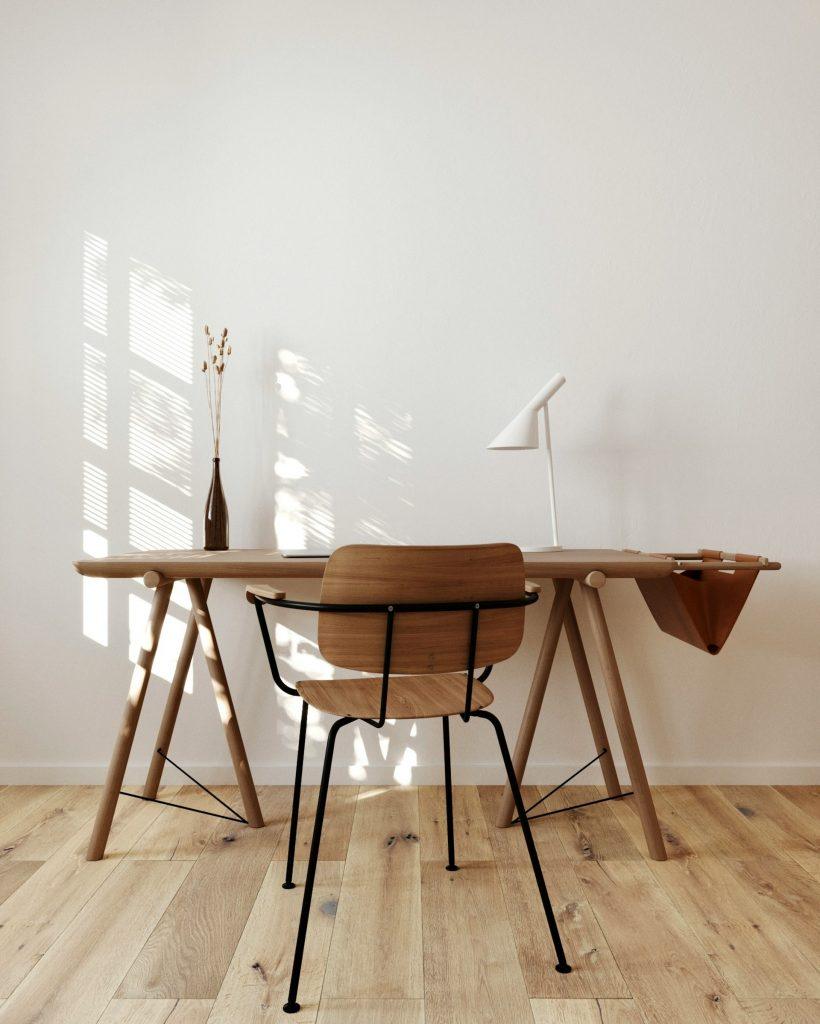
Desk and surface essentials for a tidy vibe

  • Choose a clean, unobtrusive desk: simple lines, a finish that hides fingerprints, and enough depth for monitors.
  • Minimalist monitor setup: one or two screens, neatly mounted if possible, to reduce desk clutter.
  • Surface discipline: limit to essentials only—monitor, keyboard, a notebook or planner, and one decorative but compact item.

Smart storage that actually gets used

  • Vertical solutions: tall bookcases, wall-mounted shelves, or pegboards to keep items off the desk.
  • Hidden storage: under-desk drawers, rolling carts, or slim filing cabinets for papers.
  • Clear labeling: use consistent labels for folders, boxes, and bins to speed up tidying.
  • Drawer strategy: implement multi-compartment organizers for pens, cables, and supplies.

Cable management that makes a difference

  • Centralize power: use a single power strip with a tidy cord sleeve.
  • Route cords out of sight: clips, channels, and adhesive cable organizers along the desk edge or behind the desk.
  • Wireless first: where possible, choose wireless peripherals and cloud-based workflows to reduce cables.
  • Hide the chaos: a shallow cable box or basket keeps cords contained and out of view.

Personalization, but keep it calm

  • One or two meaningful items: a small photo frame, a single plant, or a favorite trophy—kept tidy and minimal.
  • Plant life: choose a low-maintenance plant to add life without creating mess or extra care.
  • Color restraint: a cohesive palette (2–3 colors) for accessories helps the space feel intentional and serene.

Lighting and ergonomics for long work sessions

  • Natural light first: place the desk near a window if possible, but avoid screen glare.
  • Task lighting: a good desk lamp with adjustable brightness reduces eye strain.
  • Ergonomics: monitor at eye level, chair supports your lower back, and keyboard/mouse within easy reach to prevent clutter and fatigue.

Maintenance routines that keep neatness effortless

  • Daily 5-minute reset: close the laptop, return items to their designated spots, and straighten the desk.
  • Weekly tidy: purge old papers, dust surfaces, and wipe down electronics.
  • Monthly deep clean: clean monitor screens, keyboards, and refresh storage zones if you notice drift or dust buildup.
  • Quick digital tidy: routinely organize files in the cloud or on your computer to prevent “digital clutter” that mirrors physical clutter.

Small-space hacks that really work

  • Foldable or wall-mounted desk options for ultra-tight rooms.
  • Stackable storage or modular units that can be reconfigured as needs change.
  • Floating felt or cork boards for notes and inspiration without taking up desk real estate.
  • Use color-weighted cues: match the color of storage bins to the wall to create a seamless, less cluttered look.

A simple, repeatable routine you can actually keep

  • The 10-minute Friday reset: clear the week’s leftovers, archive completed tasks, and prep the space for Monday.
  • The “one-touch” rule for paperwork: deal with a document the first time you touch it (file, action, or discard).
  • The weekly inventory check: ensure you aren’t accumulating unused gadgets or supplies.

If you share the space or have a multi-use room

  • Separate visually: use a small area rug, curtain, or room divider to define the office area.
  • But keep it practical: ensure you still have easy access to shared items and maintain a tidy, respectful zone for others.

The Desk Plan

  • Clear, measure, and draft a simple layout.
  • Choose storage solutions and implement a clean desk policy.
  • Route cables and install a discreet cable management system.
  • Add one plant and a small personal item.
  • Set up a daily 5-minute reset routine.
  • Create a weekly 15-minute tidy ritual.
  • Review usability and adjust zones or storage as needed.

Before and after: visualizing the transformation

  • Before: a crowded desk with loose papers, tangled cables, and a hodgepodge of items.
  • After: a calm, organized space with a clean desk surface, clearly labeled storage, and a couple of personal touches that don’t overwhelm.

Practical tips to maximize impact

  • Stick to a consistent color palette for accessories to create a cohesive look.
  • Invest in one high-quality, functional item (chair, desk mat, or storage unit) to reduce clutter and improve usability.
  • Let the space reflect your workflow—don’t display items you don’t use regularly.
  • Keep an inbox tray or digital inbox for incoming items
[/pms-restrict]