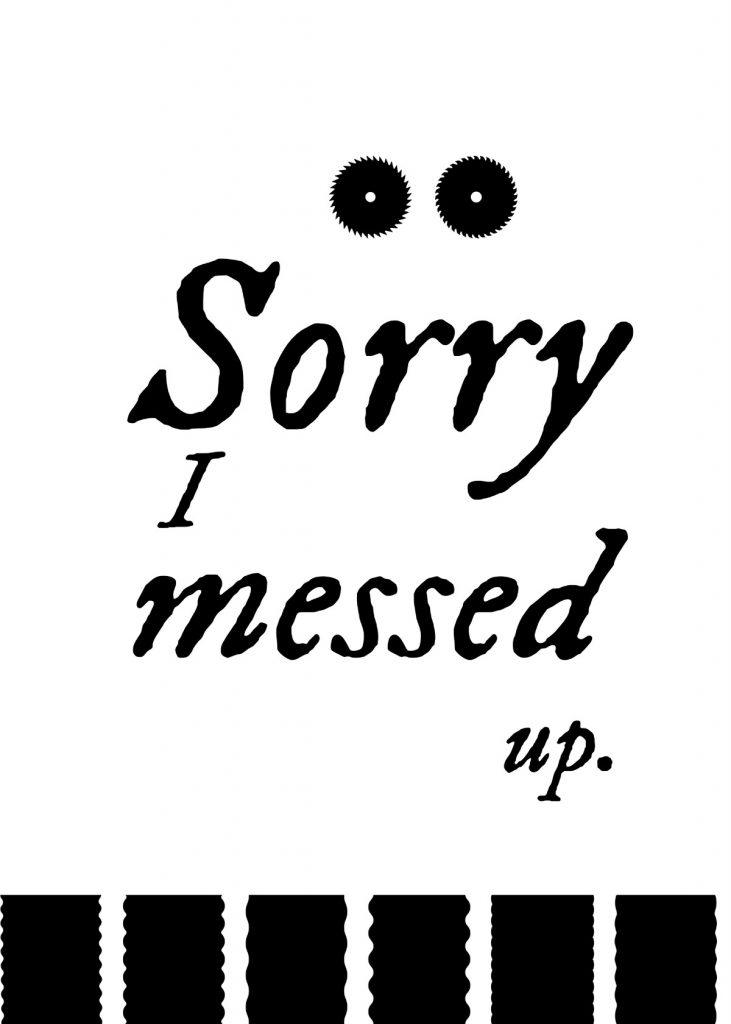
When you mess up, send this Jpg in an email or chat text


Health Storey Daily for Clients

Use this structure during 1-on-1 conversations.
| Phase | Your Action | Professional “Scripts” |
| Confirm Facts | Acknowledge you are focused. | “I want to make sure I’ve got this right. Let me take a second to recap what you’ve said.” |
| Paraphrasing | Paraphrase their core point. | “So, from your perspective, the main issue is _______?” |
| Acknowledgement | Acknowledge the “why.” | “I can see why that’s a priority.” |
| Expand Conversation – Open Ended Question. | Open the floor for depth. | “What would a successful outcome look like?” |
Active Reading in email prevents the “I didn’t see that” or “I thought you meant X” back-and-forth.
Subject: Formal Apology – [Member Name] – [Date]
To the Boss
I am writing to sincerely apologize for [specific action/incident]. I recognize that my conduct on [Date] fell short of the standards, values and corporate culture we uphold at [ name of company / department of company.]
Our organization is built on [the rule/standard you violated], and I deeply regret that my actions may have [affected my work or compromised a business relationship or affected my colleagues. I take full responsibility for this lapse in judgment caused by [what caused the lapse in judgement.]
Moving forward, I would like to [specific corrective action, attend HR training.] I value my place in the business / department and hope to regain your trust and the trust of my colleagues.
With sincerest apology,
[Your Name]
Dear [Name] / Department
I wanted to reach out and apologize for what happened [earlier today/at the meeting]. I realize that my words/actions regarding [topic] were insensitive and did not show the respect you deserve as my colleagues.
I value our work relationship and the unique perspectives you bring to my job. I am learning how to better navigate in our shared space, and I’m sorry that I let you down by [action that let them down.]
When you’re ready, please let me know how I can improve my communication style or work style so that this event does not repeat in the future.
Sincerely,
[Your Name]
Subject: Sincere apologies regarding [Order/Service Number]
Dear [Client Name],
Please accept my sincere apologies for the [delay/error] regarding [specific service or product]. At [Your Business Name], we pride ourselves on delivering high-quality service, and on this occasion, we clearly fell short of our standards.
I understand how this has impacted you, and I am taking immediate steps to ensure this does not happen again.
Thank you for your patience and for being a valued client. We appreciate the opportunity to correct this failure in service and strengthen our business relationship.
Sincerely,
[Your Name]
Subject: Apology regarding [Specific Project/Issue]
Dear [Client Name],
I am writing to personally apologize for the mistake made in [specific task]. After reviewing the situation, I realize that [briefly explain what happened—e.g., a communication lapse or a technical oversight] led to this result.
I have already [action taken to fix the mistake] and am personally overseeing the remainder of this project to ensure the highest quality moving forward.
I value our professional relationship and am committed to regaining your trust. Please let me know if you would like to hop on a quick call to discuss any further concerns.
Sincerely,
[Your Name]
Subject: Following up on our recent communication
Dear [Client Name],
I wanted to reach out and apologize for the delay in getting back to you. We have been experiencing a higher volume of inquiries than usual, and are fixing this issue through our personnel.
I appreciate your patience while I gather the information you requested. Please find the details attached below:
[Insert information requested]
Thank you for your understanding. I look forward to moving forward with you on this.
Best,
[Your Name]
Constructive criticism in a professional setting provides feedback that isn’t about fixing a person. the constructive advice is about protecting standards and helping individuals reach their potential.

Constructive feedback is advisable:
When someone is learning a new role or task constructive advice provides them with a feedback loop to improve.
Sometimes the work is great, but the way it’s being done creates friction within the team.
When the output of the work starts to slip, or when a specific mistake could have serious consequences.
If a dynamic between two people is hindering productivity, a third party mediator protocol is set by the HR department. All Departments and all employees may request a mediator protocol to be in place in all departments to avoid the escalation of a discussion.
Providing feedback to someone who regularly speaks over others during meetings.
Telling a colleague that their habit of dismissing an employee or laterally moving them is making the team less creative.
Not every situation requires a critique but may require feedback.
| Situation | Action | Reason |
| New Task | Give Feedback | Accelerates the learning curve. Help them advance their skill set. |
| Public Mistake | Wait / Private Feedback | Avoids humiliation and defensiveness and make sure you know why they made the mistake. |
| Culture Fit | Give Feedback | Protects team morale and long-term retention. If the employee does not like the corporate culture, help them relocate. |
| Personal Style | Observe Only | Encourages diversity of thought and autonomy at work and enforce corporate culture set by HR. |

The short answer is yes.
When a colleague is focused, your goal is to gauge their “interruptibility” without actually breaking their flow yet.
Knocking on a door can feel intrusive. Your opening should bridge the gap between “I’m interrupting” and “This is worth your time.”
In a cold call, you have about five seconds before the “sales” shield goes up. Avoid “How are you today?”
| Scenario | Avoid This (Low Intent) | Try This (High Intent) |
| Colleague | “Got a sec?” | “Are you in the middle of something, or can I ask a quick question /favour?” |
| Boss | “Can I talk to you?” | “I have an update or issue. Do you have a second? [ Stay Standing and in the doorway.] |
| Client | “How’s your day going?” | “Morning! I’m calling to invite/let you know/find out/ |
There are unspoken rules for space and touch during a conversation that determine how comfortable people feel during an interaction. Understanding these helps prevent “space invading” and ensures both parties feel safe and respected.

Sociologists state that there are four distinct “proxemic” boundary zones.
| Zone | Distance | Typical Relationship |
| Intimate | 0 – 18 inches | Close family, partners, or very close friends. |
| Personal | 1.5 – 4 feet | Friends, coworkers, and acquaintances. |
| Social | 4 – 12 feet | New acquaintances, formal business, or groups. |
| Public | 12+ feet | Public speaking or passing strangers. |
Handshakes, high-fives, or a hand on the shoulder or elbow.
Standing face-to-face or in an angled direction.
Different forms of eye contact from too much to too little.
The dynamics of being at different heights. A feeling of boundary violation may occur if the conversationalists are at extreme height differences.
How to Define Your Boundaries
You have every right to decide how much space you need.
If the other person is too close, you have the right to pivot your body away from theirs or take a step back and place an object between you like a tablet or a chair.
If you don’t want to be hugged or to shake hands, a polite wave, ”Hang Ten”, hand over heart or a slight bow works to acknowledge someone in a respectful way and avoid touching.
If someone ignores your physical cues, it’s okay to end the conversation. Be clear. Use “I” statements to keep it from sounding like an attack on that person:
At work make sure your work colleagues know you are listening by using:

The “rules” of engagement shift significantly when you cross borders. Here is a breakdown of how eye contact and body language typically function in these regions:
Confidence and directness are the primary currencies of professional interaction.
Too Close (Under 1.5 feet): Entering this distance while walking can feel aggressive or overly familiar and cause the other person to edge away.
Too Far (Over 4 feet): This makes conversation difficult especially in noisy locations. The extra distance can make the interaction feel disjointed or cold or increase the volume of the conversation and make it more aggressive.
Gestures that are animated are generally acceptable.
There are three main rules for casual social conversation structure. This common framework structures a conversation or chat into three phases:

Regardless of the number of topics in your conversation, the level of engagement is an indicator that you have the right topic count. Consider stopping, transitioning or pausing the conversation if you notice:
Ending a conversation is an art form—you want to leave the door open for future interaction without making the current one feel like it’s dragging on.
The most effective exit lines usually follow a simple formula: The Validation (acknowledging the chat) + The Pivot (stating your next move) + The Future (a parting well-wish).
The goal with strangers and with work colleagues is to be friendly, but professional enough to avoid heated discussions.
Here are several categories of safe, engaging conversation starters for the workplace.