
Weekend | Work On Home Office Layout | Hours

Best Office Layouts for a Productive, Adaptable Workplace


The layout of an office does more than just hold desks and chairs. It shapes how people collaborate, where deep work gets done, and how a company adapts to change. A great office layout supports your culture, keeps people engaged, and scales with growth. The challenge is balancing openness with privacy, collaboration with focus, and cost with comfort. Below are the most effective layouts you’ll see in modern offices, along with when they shine, common pitfalls, and practical tips to make them work for your team.

Open-Plan / Collaborative Layout
What it is: Long rows or clusters of desks with minimal walls, designed to enable quick conversations and spontaneous collaboration.

Pros

  • Fosters quick communication and teamwork.
  • Maximizes floor space and can feel more energetic and inclusive.
  • Easier to reconfigure as teams shift.

Cons

  • Noise and visual distractions can hurt focus.
  • Some employees may feel exposed or exposed to interruptions.

When it shines

  • Creative, design, and sales teams that rely on rapid feedback.
  • Startups or fast-growing teams that prioritize collaboration over privacy.
  • Use zones: dedicate specific areas for heads-down work and others for collaboration.
  • Add sound-absorbing materials: carpets, ceiling tiles, acoustic panels, and upholstered furniture.
  • Create “quiet corners” with taller furniture or screens for focused work.
  • Introduce visual cues to signal when someone is in deep work mode (e.g., desk nameplates, signals, or status indicators).

Activity-Based Work Layout
What it is: A campus-like approach with distinct zones for different activities—focus, collaboration, socializing, and breakout work—often with a mix of furnishings and clever wayfinding.

Pros

  • Supports varied work styles within one space.
  • Encourages collaboration in the right spaces and privacy when needed.
  • Flexible by design; easy to reallocate areas without major construction.

Cons

  • Requires thoughtful planning and clear usage guidelines.
  • Can feel chaotic if zones aren’t well defined or poorly signed.

When it shines

  • Teams with a mix of roles: developers who need deep focus, marketers who need collaboration, and managers who host meetings.
  • Companies undergoing frequent project shifts or process changes.

Practical Tips

  • Map activities to spaces: designate dedicated rooms or zones for focus, meetings, quick huddles, and social areas.
  • Plan sightlines and wayfinding: clear arrows, color-coded zones, and signage help people find the right space quickly.
  • Invest in flexible furnishings: height-adjustable desks, mobile whiteboards, and movable screens to morph spaces as needs change.
  • Consider acoustics in open areas: soft furnishings, wall panels, and ceiling treatments to keep background noise manageable.

Cellular Private Offices / Mixed Privacy Layout
What it is: A mix of private offices or enclosed workstations with doors, balanced by shared spaces for meetings and collaboration.

Pros

  • Strong privacy and reduced interruptions for deep work.
  • Clear delineation between management and staff in many designs.

Cons

  • Can feel isolating and reduce spontaneous collaboration if overused.
  • Higher real estate costs per employee and potential underutilization.

When it shines

  • Roles that require confidentiality or extensive concentration (legal, finance, R&D, senior leadership).
  • Teams that need predictable meeting rooms and private spaces for sensitive conversations.
  • Blend with open, collaborative zones to avoid isolation.
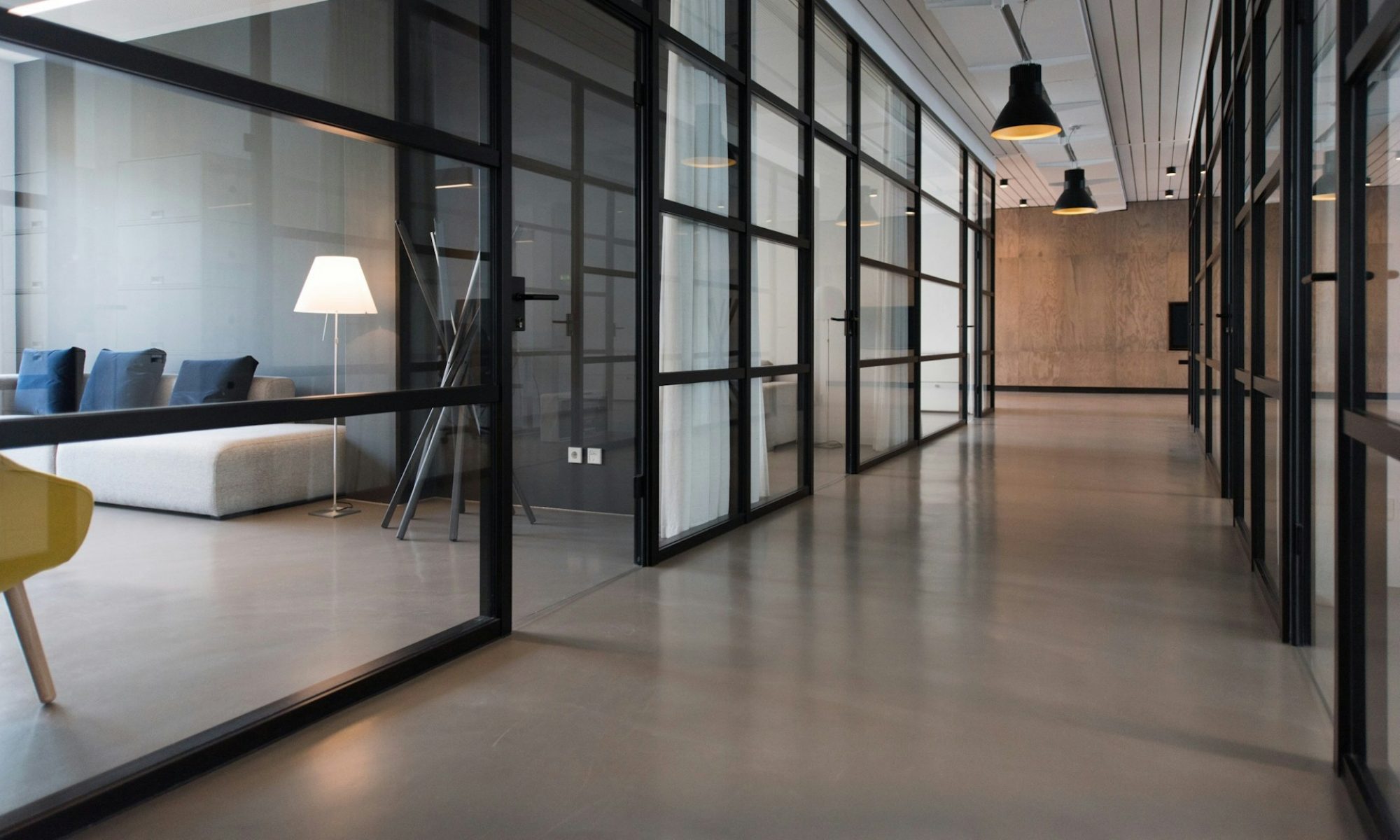
  • Use glass or transparent partitions to maintain a sense of openness while preserving privacy.
  • Create “office adjacencies” for quick interactions: place meeting rooms and quiet rooms near teams to minimize long walks.

Hybrid / Breakout-Heavy Layout
What it is: A flexible mix of small nooks, breakout lounges, informal seating, and short-task desks designed to support quick, informal work sessions and meetings.

Pros

  • Encourages informal collaboration and rapid problem-solving.
  • Feels modern and approachable, often improving employee satisfaction.

Cons

  • Can suffer from underuse if spaces aren’t inviting or properly scheduled.
  • Requires ongoing management to keep reservation systems simple and fair.

When it shines

  • Teams that brainstorm frequently, run standups, or host clients in-house.
  • Organizations embracing agile, sprint-based workflows.

Practical tips

  • Offer a spectrum of breakout formats: high-top tables for quick chats, lounge seating for relaxed discussions, and semi-enclosed nooks for privacy.
  • Implement a simple booking or “first-come, first-served” system to avoid crowding and overlap.
  • Provide writing surfaces and digital collaboration tools in breakout areas to capture ideas quickly.

Modular / Flexible Layouts with Movable Walls
What it is: Floor plans built with demountable walls, modular furniture, and easy-to-reconfigure components that evolve with your business.

Pros

  • Extremely adaptable to headcount changes or new workflows.
  • Protects long-term space value by enabling reconfiguration rather than relocation.

Cons

  • Higher initial investment and planning effort.
  • Requires ongoing management to keep the space coherent.

When it shines

  • Growing companies, firms that pivot often, or businesses planning frequent internal reorganizations.
  • Spaces that host rotating teams or cross-functional projects.

Practical tips

  • Plan for scalable zones: design core areas that can be expanded with modular inserts.
  • Choose modular furniture with multiple configurations to support different activities.
  • Keep electrical, data, and HVAC in mind; plan for future needs when you install partitions.

Deskless / Hot-Desking Layout
What it is: A system where employees don’t have assigned desks; they choose a workstation when they arrive, often guided by a booking app.

Pros

  • Maximizes real estate efficiency; good for hybrid or remote-heavy teams.
  • Encourages movement and interaction across departments.

Cons

  • Personalization can be tough; some people struggle to leave belongings behind.
  • Requires strong IT and facilities support to manage bookings, equipment, and entry access.

When it shines

  • Companies with strong hybrid work policies or limited on-site needs.
  • Teams that travel between client sites or work remotely part

Daily Goal | One Hour Cleaning Desk Space | Health Storey Goal |

What are we writing about today? Building a calm, productive home office with smart layout, clever storage, and simple maintenance habits that keep clutter at bay—without sacrificing style or comfort.

Monday : Daily Health Storey Goal | Clear off your desktop for one hour.


Working from home can blur the line between living space and workspace, which often leads to clutter creep. The goal isn’t a sterile office; it’s a space that feels calm, functions efficiently, and still reflects your personality. Below is a practical guide to designing a home office that stays neat through smart layout, thoughtful storage, and easy maintenance routines.

You must be logged in to view this content.

Newsletter | Laundry |Health Storey Goals | No. 3 of 2026

Laundry 101: What to Wash, How to Choose Detergents, and How to Dry Things Right

Laundry Lab: Washing Everything That Belongs in the Washer

Keeping a busy home fresh and organized starts with smart washing and drying habits. In this issue, we simplify what can go in your washer, which detergents to use, and which fabrics should stay out of the dryer or need special care. Quick tip: always check garment care labels first—they’re the best guidance for each item.

Section 1: What can go in the washer

– Everyday cottons and linens: shirts, jeans, towels, bed sheets. Use warm or cold water depending on soil level and colorfastness; wash darks separately from lights.

– synthetics and blends (polyester, nylon, spandex): generally fine on cold or warm cycles; many hold color well.

– Delicates and sweaters: use a gentle or delicate cycle; consider a mesh bag for small items.

– Athletic wear: wash in cold water to protect elasticity; avoid fabric softeners which can reduce moisture-wicking.

– Kids’ clothing and bibs: follow label care; use fragrance-free detergent if there are sensitivities.

– Bedding and bath towels: can often handle warm water; use a longer cycle for bulky items.

– How to sort: by color (lights, darks, bright colors), by fabric type (delicates separately), and by soil level (heavy soils separate from lightly soiled items).

Section 2: Detergents to use

– Types of detergents:

  – Liquid detergents: great for greasy stains and pre-treating; easy to measure.

  – Powder detergents: often cost-effective; good for hard water when paired with a water-softening booster.

  – Detergent pods/pacs: convenient, but use only one per load and keep out of reach of kids.

  – Fragrance-free or dye-free options: better for sensitive skin or households with allergies.

– High-efficiency (HE) washers vs standard machines:

  – If you have an HE washer, use HE detergents. They produce fewer suds and work best with reduced water.

  – If you have a standard washer, regular detergents work fine, but follow the label for the correct amount.

– How much to use:

  – Follow the product label; a typical small-to-medium load often uses less than the cap suggests.

  – For hard water, you may need a little more detergent or a water-softening booster.

– Special boosters (optional):

  – Oxygen-based bleach for whites and color-safe brightening (avoid chlorine bleach on colored fabrics and delicate fibers).

  – Stain pretreaters for tough spots (grease, wine, grass). Test on hidden seam first.

– Tips for sensitive households:

  – Choose fragrance-free, dye-free detergents.

  – Rinse cycles matter; extra rinse can help remove detergent residue that irritates skin.

Section 3: What can be dried in the dryer vs. what should air-dry

– Dryer-friendly items (low to medium heat; shorter cycles help extend life):

  – Most cottons and poly-cotton blends

  – Synthetic fabrics (polyester, nylon blends)

  – Towels and bath sheets

  – Sweatshirts and fleece (watch for pilling)

– Delicates and items to air-dry or lay flat:

  – Wool and cashmere sweaters (lay flat to preserve shape)

  – Silk, satin, and delicate tops (use a lingerie bag or air-dry)

  – Rayon/viscose and some duplex fabrics (check care label; many are air-dry only)

  – Certain knitted patterns and beaded garments (premature shrinkage risk)

– What “dry-clean only” really means for home laundry:

  – Dry-clean-only items should not go in a home washer or dryer unless the care label explicitly says otherwise.

  – If you’re ever unsure, test with a small, inconspicuous area or take to a professional cleaner.

– Practical tips to dry efficiently:

  – Clean the lint screen before every load to maximize drying efficiency.

  – Use the right heat setting: low/air-dry for delicates; medium heat for most cottons; high heat only for sturdy items that tolerate it.

  – Use dryer balls or clean tennis balls to help bounce and reduce drying time for bulky items like towels and blankets.

  – Remove items promptly to minimize wrinkles; fold or hang after they’re dry.

Section 4: Quick home laundry routine templates

– Everyday casual path: cold wash for most colors, gentle cycle for delicates, air-dry or low-heat for delicate pieces.

– Towels and bedding path: warm wash if soil is moderate, longer dry on medium heat, add dryer balls to speed up drying.

Section 5: Troubleshooting tips

– If colors bleed: wash separate for the first few cycles or use color-catching sheets.

– Lingering odors: rewash with a bit more detergent and add a half cup of baking soda to the wash.

– Clothes shrinking after a warm wash: avoid high heat; re-wet, re-shape, and air dry if possible.

– Detergent residue on clothes: add an extra rinse cycle or run an extra rinse on the machine.

Section 6: A quick care checklist

– Always check care labels before washing.

– Sort by color, fabric type, and soil level.

– Use the appropriate detergent and the recommended dose.

– Match water temperature to the fabric and soil.

– Dry items on the recommended setting; avoid high heat on delicates.


Daily Goals for this Week

  • Monday – Clear Desk Space
  • Tuesday – Sort Paperwork
  • Wednesday – Tidy Desk Drawer
  • Thursday – Organize Digital Files
  • Friday – Clean Keyboard
  • Saturday – Create Functional Workspace
  • Sunday – Add personal Touches to work space at work and home

Cleaning Goal | Cleaning Around the Bed | Health Storey January |

Welcome to Monday! I’m working on the corporate paperwork and training an AI but the cleaning Goal for you and for myself today is:

| Clearing the space around the bed – Decluttering – Getting rid of visual stress |

Did you drink your coffee today? For detoxification, it is important to have coffee in the morning with some dairy. You can have dairy in your coffee or have a piece of cheese. Health Storey Coaches can explain to you the importance of coffee with dairy milk.

Clear Space, Clear Mind: The Importance of Minimal Visual Clutter in the Bedroom (Especially Around the Bed)

If your bedroom feels like a staging room for everything you own, your sleep routine might be paying the price. Visual clutter can drain energy, disrupt relaxation, and even make mornings feel chaotic. The good news? A simple, deliberate approach to keeping the space around your bed free of clutter can transform how you rest, recharge, and wake up. Here’s why it matters and how to make it work in real life.

Why visual clutter around the bed matters

  • Sleep quality and stress: A calm, orderly environment signals to your brain that it’s time to unwind. When surfaces are crowded with books, devices, and laundry, your brain has more stimuli to process at a time when it should be winding down. A cleaner visual field can help reduce cognitive load and promote deeper, more restorative sleep.
  • Safety and ease: The bed is the room’s center of comfort, but it’s also a potential trip hazard if cords, shoes, or laundry spill into the floor or nightstands. Keeping the space around the bed clear reduces the risk of stumbles at night and makes it easier to get in and out of bed.
  • Routine and mental clarity: A tidy bedside area supports a smoother evening routine. When you know exactly where the essentials live (lamp, water bottle, a notebook, a charger), you waste less time searching and more time relaxing or drifting off.
  • Ambiance and mood: Clutter clashes with a tranquil mood. A minimal, uncluttered vibe—soft textures, warm lighting, and a cohesive color palette—creates a sanctuary-like feel that’s inviting to rest.

What “clutter around the bed” typically looks like

  • Nightstands overloaded with gadgets, cables, and random papers
  • Cables and chargers sprawling across surfaces or the floor
  • Stacks of books, magazines, or laundry piles near the bed
  • Decorative items that aren’t used for sleep, right at eye level
  • Under-bed storage that’s overflowing or difficult to access
Content Below is for Subscribers to Daily Storey
You must be logged in to view this content.